Hello everyone,
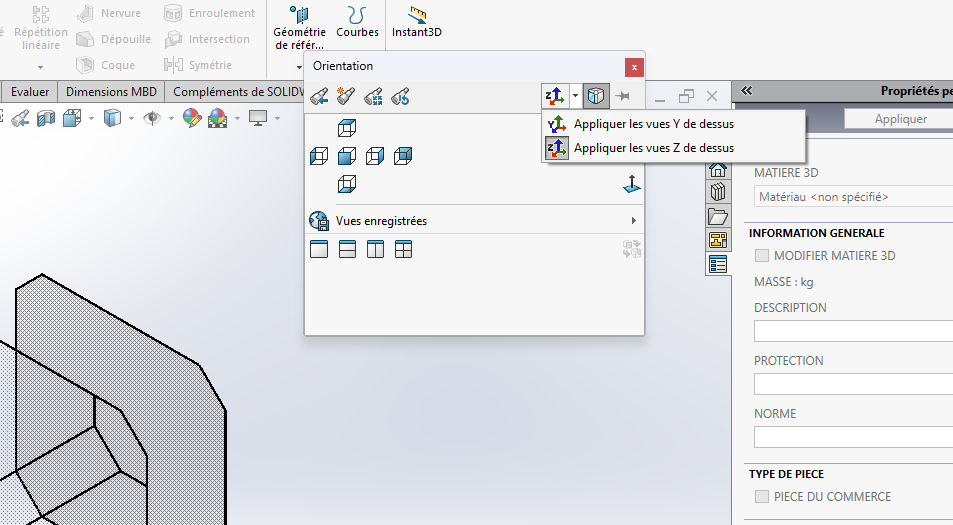
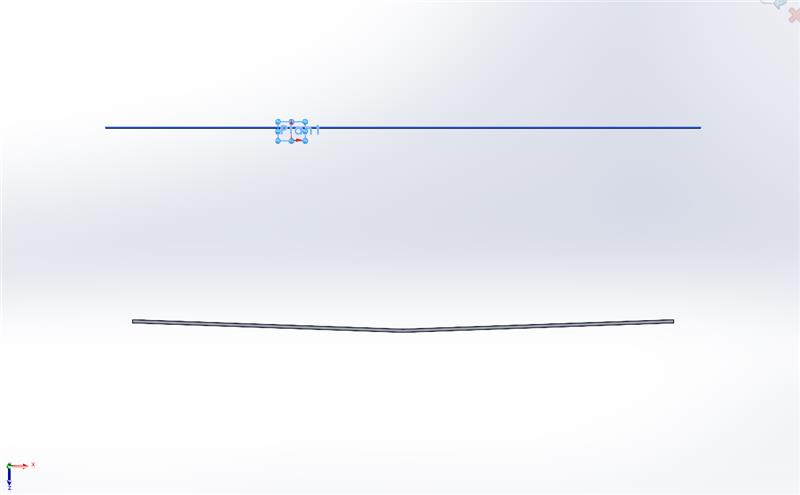
When I create a new sketch the origin of it orients me the Z axis down by default. Is there a way to orient the Z axis up by default.
Thanks in advance to all
Hello everyone,
When I create a new sketch the origin of it orients me the Z axis down by default. Is there a way to orient the Z axis up by default.
Thanks in advance to all
Method changing the orientation of the front views is a solution or indicate Y or Z in top view
1)Press the space bar (the orientations dialog appears)
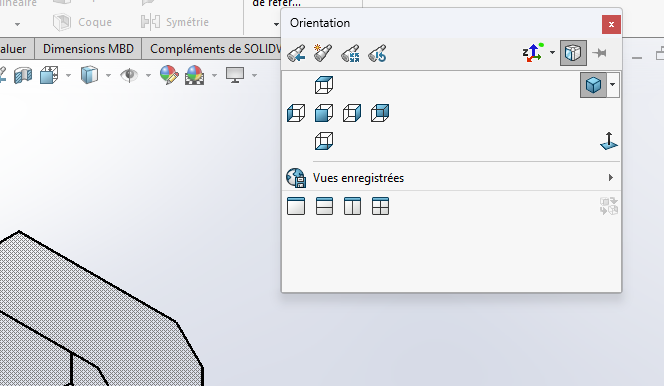
Put yourself in a front view
At the top right, change the vertical axis as shown below on the screen print
And remember to save it as a document template
Hello,
There is a parameter to change an original direction in the new versions of SW (not fucked up to find it in V2025 so probably in V2026).
Let's see if it meets your needs.
@froussel I confirm that I have seen this improvement (SW 2025 or 2026) but I can't find anything more about it!
Edit: I think I've found a final link:
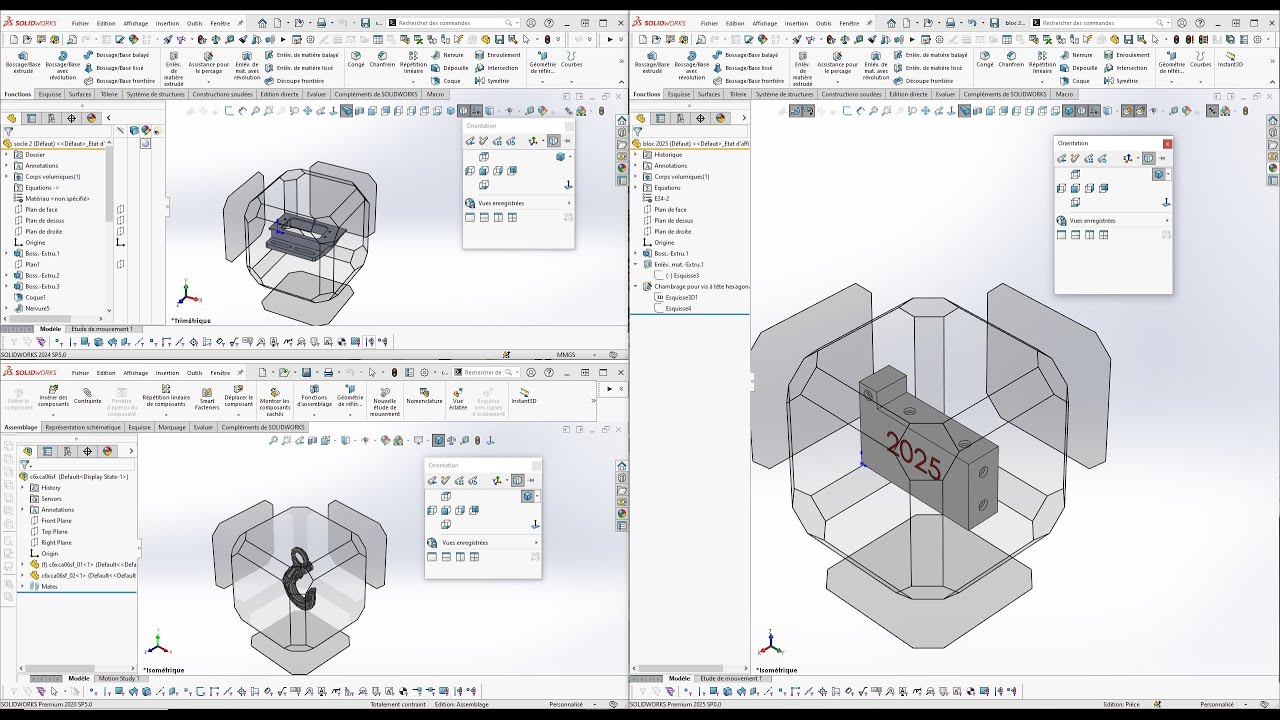
Hello,
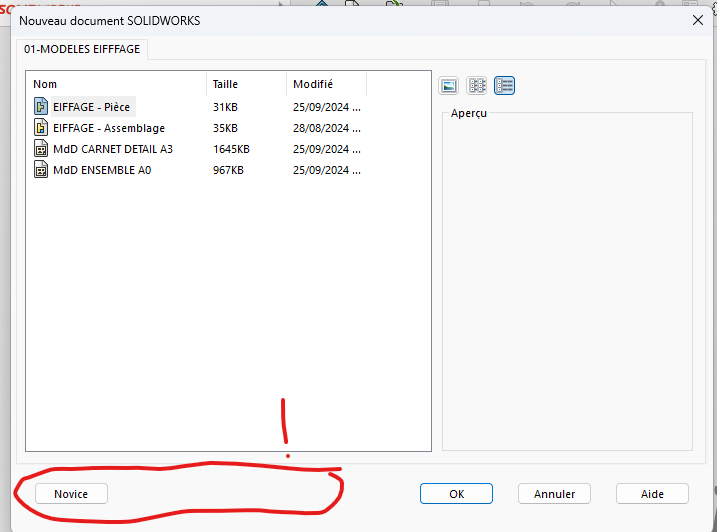
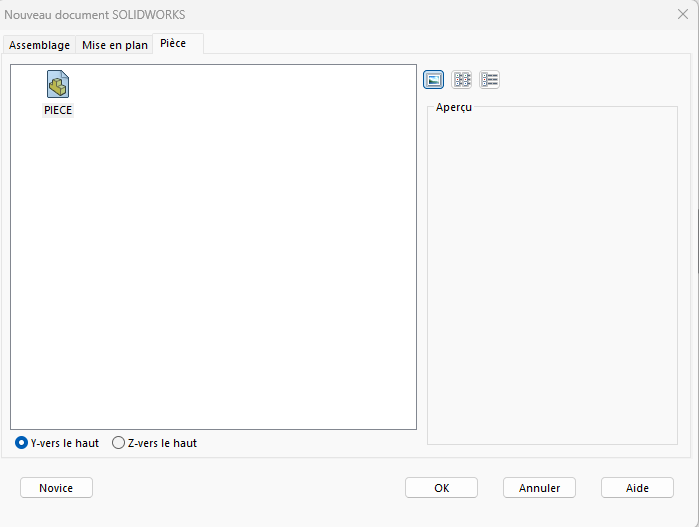
This is at the time of creating a new file.
We can select Z at the top
Hello @Cyril_f
Could you check if it corresponds to this option? or if it has been removed with this new option
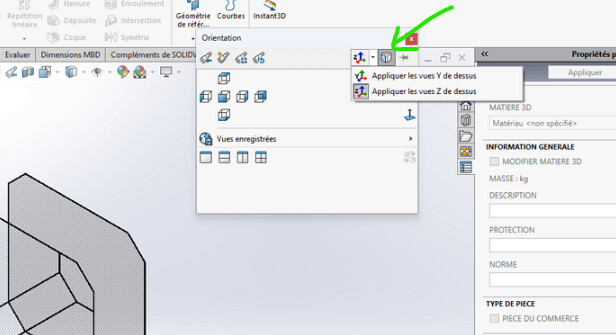
I'm on SW2022 SP5.1, and I don't have it. I have to go through the option of the previous screen print
Hello,
The option hasn't gone away, it's just that they've added the choice when creating a document since SW2025
Ok thank you
But it's the same option in different places? I guess so!
For my part, I always leave the Y up because if you put the Z up, finally if you make a sketch in front view the Y is up anyway and not the Z.
So you have to change the names of the shots in the feature manager.
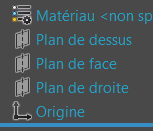
Yes, but you do it once and you replace your reference models
Hello,
I encountered the same case in SW2020. So I switched to Z upwards. As a result, only the first sketch, on the front plane, has a downward Z-axis. Subsequent sketches are no problem.
Similarly, when creating the reference documents, remember to also create the assembly reference document with the same coordinate marker. Otherwise, the elements end up lying down.
Does anyone know the reason for DS' choice to put the Y in vertical instead of the Z?
The history is vast and there is a lot of urban legend.
-SolidWorks (USA) origin uses the Y as the mechanical design software vertical (Machine tool may be the reason) see below
-Origin of CATIA (Fr) Z vertical, Aeronotics
In general mechanics there is a reason for this change: Machine tool Spindle axis = Z
On a lathe it is the horizontal and on a milling machine the vertical axis
The surveyors the Z the vertical.
There are as many reasons as there are domains that use Cartesian coordinates
Vertical Z Mathematics, Vertical Z Topography, Z GPS
Games use lz Z as the depth so horizontal it seems to me
AI Response 
The fundamental origin comes from the Cartesian coordinate system, introduced by René Descartes in 1637. [1, 2]
In pure geometry, the choice of the axis that goes " upwards " is arbitrary. Two conventions have historically opposed each other depending on the discipline: [1]
The fundamental origin comes from the Cartesian coordinate system, introduced by René Descartes in 1637. [1, 2]
In pure geometry, the choice of the axis that goes " upwards " is arbitrary. Two conventions have historically opposed each other depending on the discipline: [1]
You mean the opposite of more than 90% of other 3D software???
Probably a programmer, who trihedron with his fingers and ordered a coffee at the same time as he sucked his thumb and scratched the underside of his nose...
Right hand: X thumb, Y index finger and Z middle finger
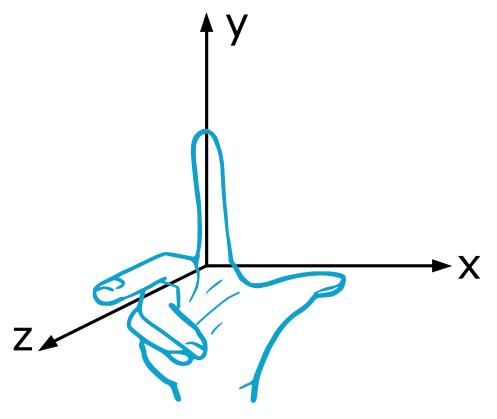
or
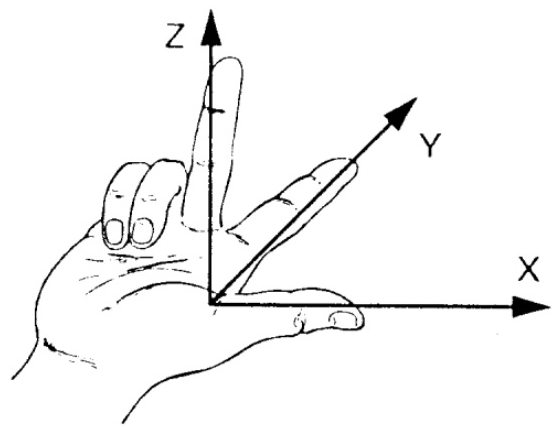
He doesn't seem to have any particular reasons to choose the Y up rather than the Z (... Y up is just a little more comfortable for the hand...), except maybe a remnant of 2D software like Autocad at the time that presented the X e Y axes in unique coordinates.
In fact, it's just surprising in our ultra-normative world that there is no convention on this subject.
On a lathe it is Z the horizontal of the spindle and in vertical milling, SolidWorks is originally mechanically focused.
Catia is more focused on aviation and therefore Z vertical
The answer is not in the origins
Other software is more recent with the vertical Z.
As for standards, they define elements when there is a real need. Or in the event of an accident or serious problem. In certain niche sectors, it is the industrialists themselves^me who create their standard.
Historically, it is often the manufacturers (or their ancestors) who defined the standards that then became standards.
It's not for nothing that we often find the big players in the sector in the standardization committees: they push for the standard to be as close as possible to what they are doing at the moment T or to what they want to do at T+1 (it would be stupid to have the whole range to take over because it does not meet the new mandatory standard).
It depends on the sector and the laws or standard dictated by the member states, they can impose stds that redefine or standardize mass products. And this often "common sense " agreements , So the reasons for this change are European legislation, Ecology  , harmonization, performance.
If we take Apple and iPhone and the change to USB C, the European standard to force this change.
Certainly agreements between manufacturers who used USB-C on other products. As the evolution of phones is quite fast, change was not a problem.