Bonjour à tous.
Je fais appel à vos connaissances techniques car là je sèche un peu même si j’ai bien une petite idée.
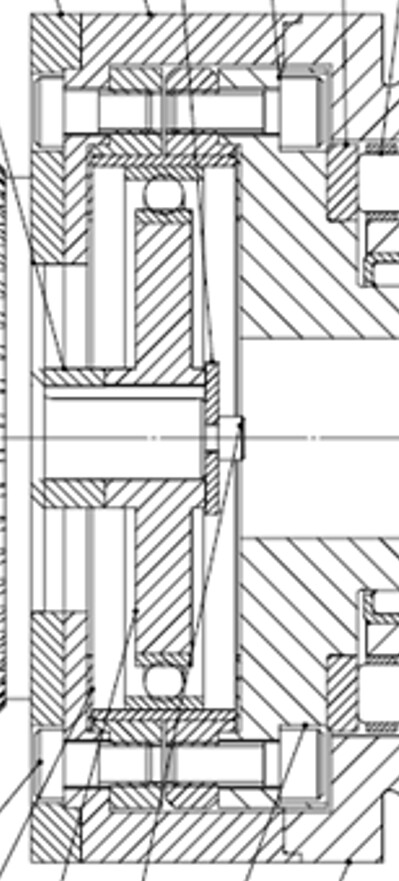
Est-ce que quelqu’un peut me dire quel composant mécanique est représenté au centre de l’image ? Réducteur planétaire, embrayage…
Merci pour vos réponses.
Bonjour @OlivierH
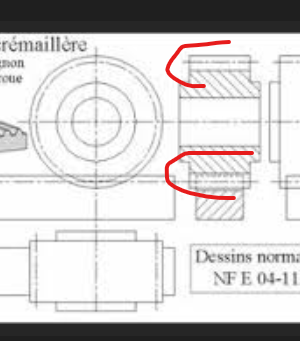
Ce ne n’est pas un engrenage il me semble, les dents d’un pignon ne se représentent pas comme ça en dessin indus.
Mais comme ci-dessous
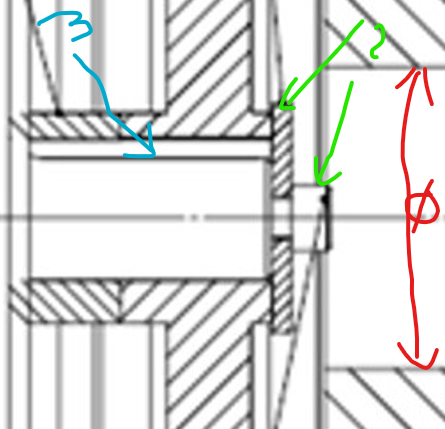
Ce système permet à la pièce centrale 1 de tourner (une rotation) et la bille 2, permet aux éléments sur l’extérieur 3 de se déplacer latéralement, ou d’avoir de la liberté latéralement.
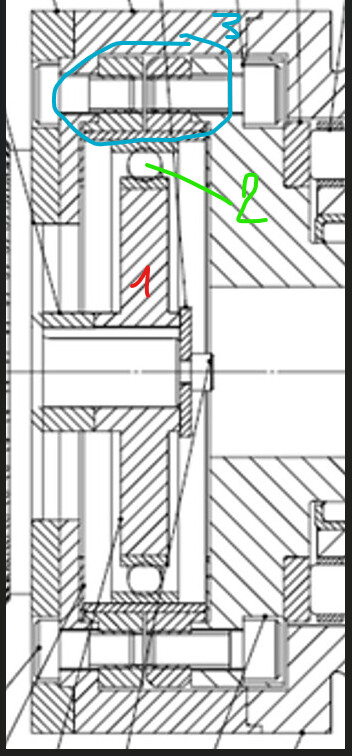
Un peu comme un crabot de boite de vitesse, peut tourner et se déplacer latéralement pour s’accoupler à un pignon d’une vitesse.
La pièce 3 est lié à 6 par une vis et sert de butée surement, les pièce 4 & 5 sont lié par la vis 7 et peuvent se déplacer il me semble.
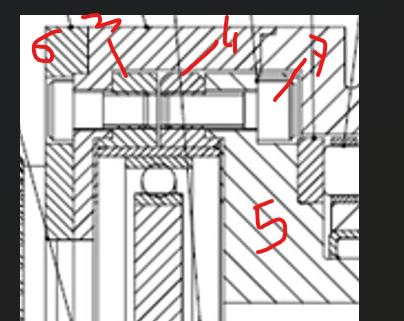
De plus on peut imaginer que sur la partie centrale l’alésage 1 sert de dégagement pour la rondelle et la vis 2 quand l’ensemble se déplace, ou son démontage ?
3 est une clavette qui permet l’entrainement en rotation
Auriez vous le dessin dans son ensemble ?
3 « J'aime »
Salut,
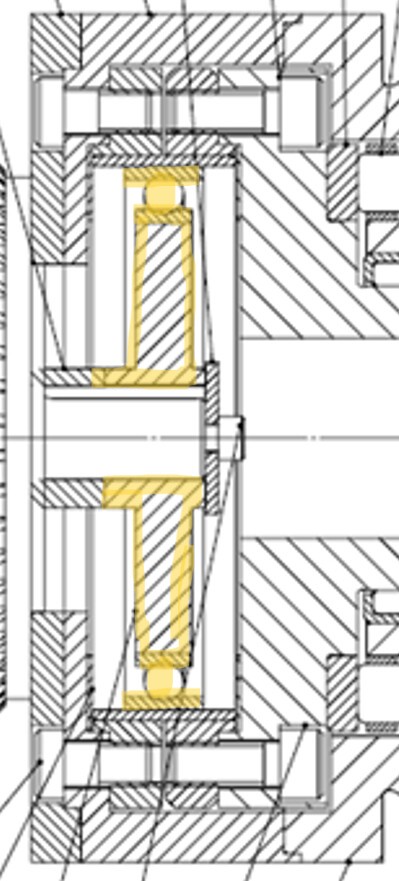
je verrai cet ensemble en jaune plutôt comme un silent bloc (partie circulaire périphérique serait en caoutchouc). Mais effectivement @FRED78 si l’on pouvait avoir l’intégralité du plan avec la nomenclature cela faciliterai l’interprétation
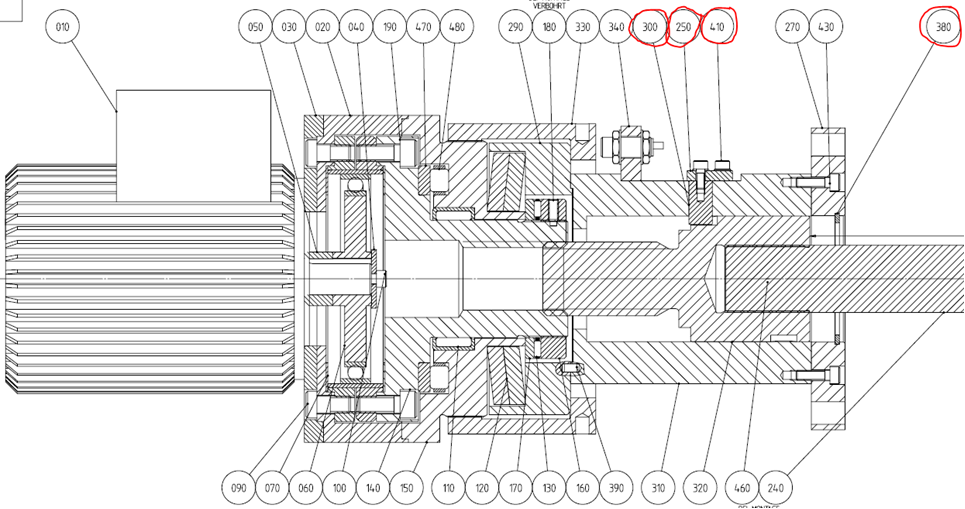
Merci pour vos réponses. Voici le plan complet mais je n’ai pas la nomenclature. C’est une bride de serrage.
Bonjour @OlivierH ,
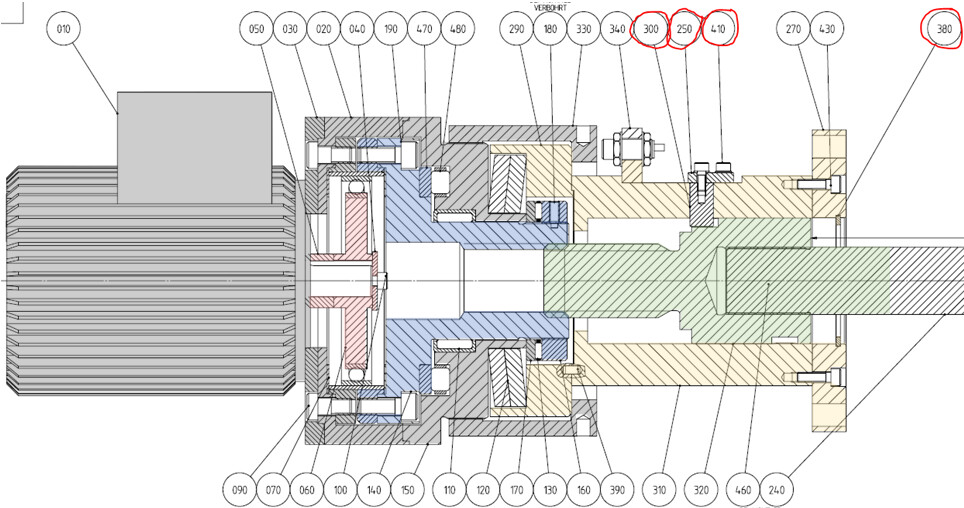
Entre l’élément moteur 060 (en rose) et l’écrou 140 (en bleu), il doit exister un réducteur de vitesse à rapport faible. La représentation est médiocre, mais l’aspect général fait penser à un réducteur Harmonic Drive série FR.
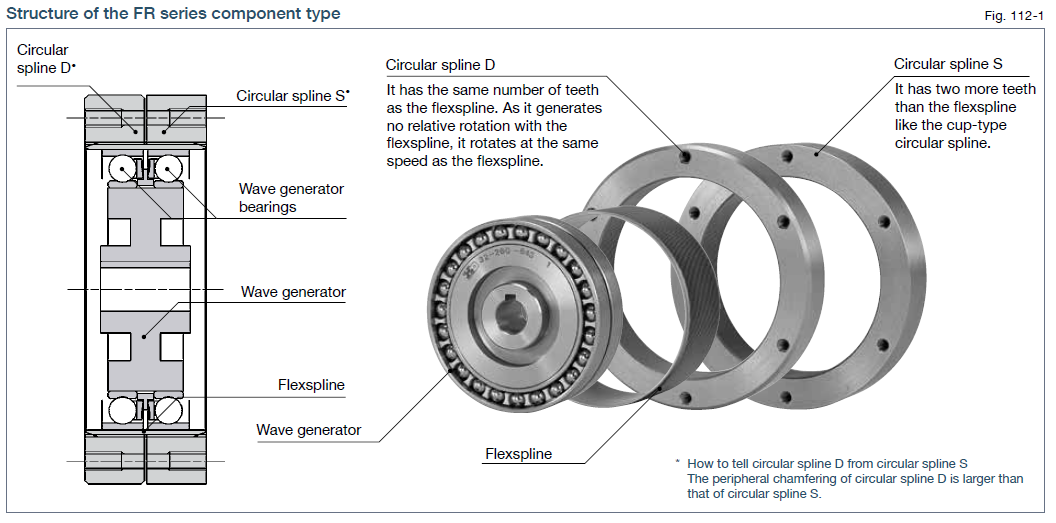
2 « J'aime »
Merci beaucoup @m_blt .
Je n’avais pas pensé à ce genre de réducteur.
Tu m’enlèves une épine du pied.
Merci encore. 
@m_blt
Par contre la pièce 150 est telle fixe ? Car les rondelles ressort ne sert pas à son amortissement?
Pour moi les éléments en jaune sont fixe  , ou je prend le problème à l’envers
@Le_Bidule
Je pense que c’est un système d’entrainement avec des dents d’engrenages avec des billes intercalés. Il me semble, j’avais déjà vu ce système mais je ne connais pas leurs utilités, pour les jeux ou pour reprendre la charge verticale ?
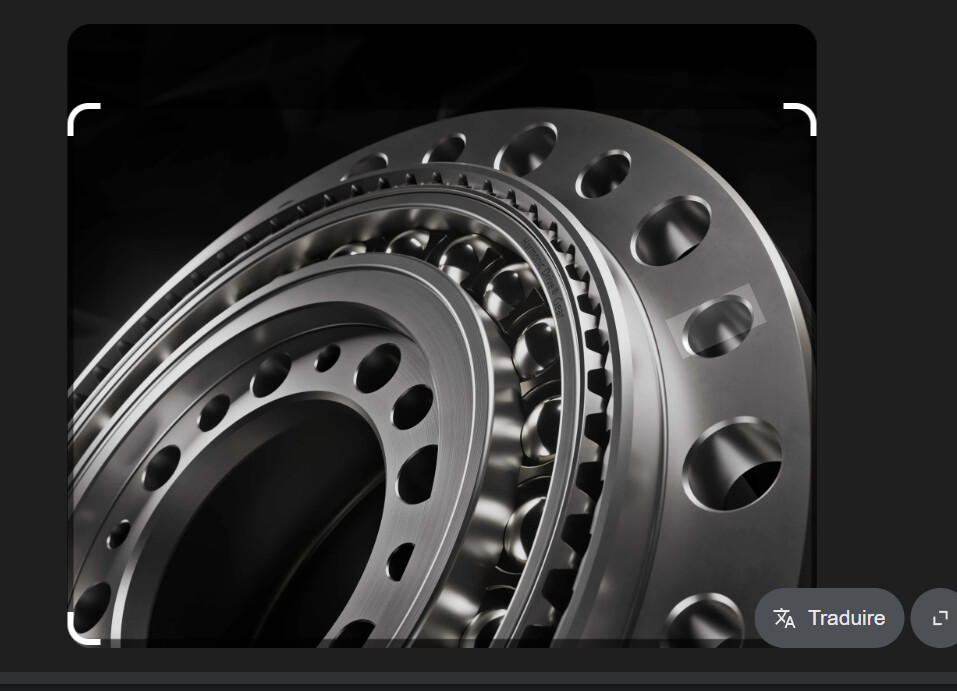
2 « J'aime »
Félicitation @m_blt pour le coup d’oeil et la connaissance de ce genre de produit (je n’avais jamais entendu parler de ce genre de réducteur à gros ratio jusqu’à présent)
Pour ceux qui sont comme moi (et qui ne connaissent pas non plus les réducteurs cycloïdaux), une magnifique vidéo de test de versions imprimées en 3D par un indien (avec un accent compréhensible pour nous pauvres français) :
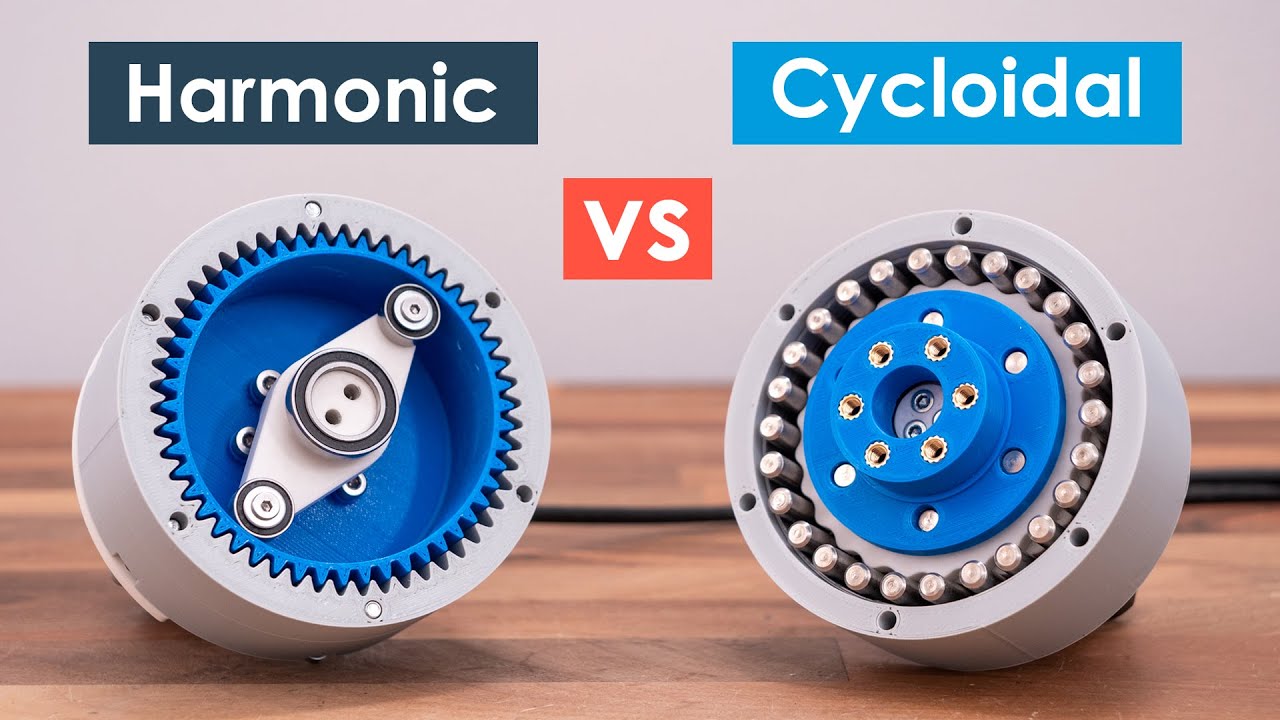
4 « J'aime »