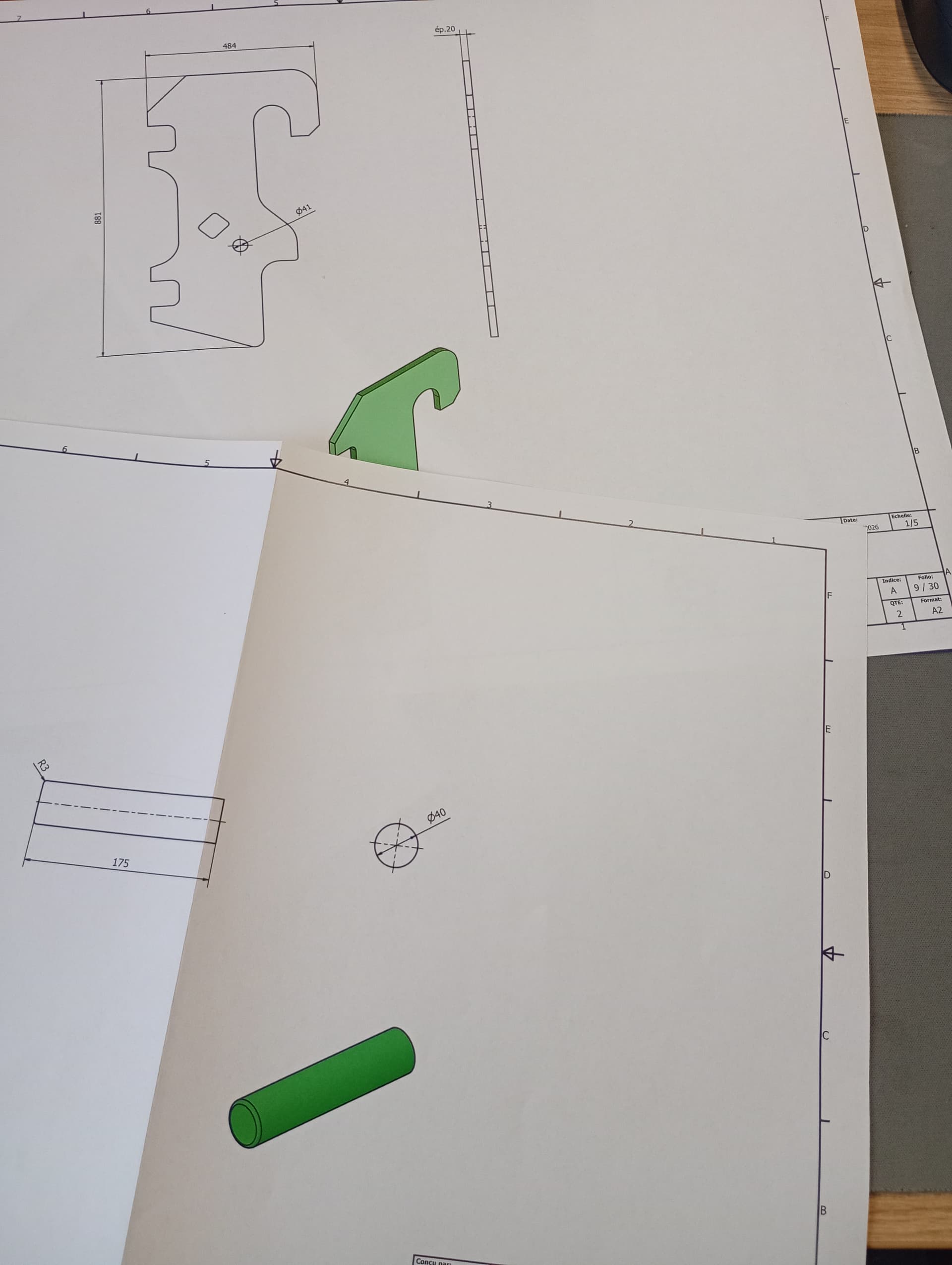
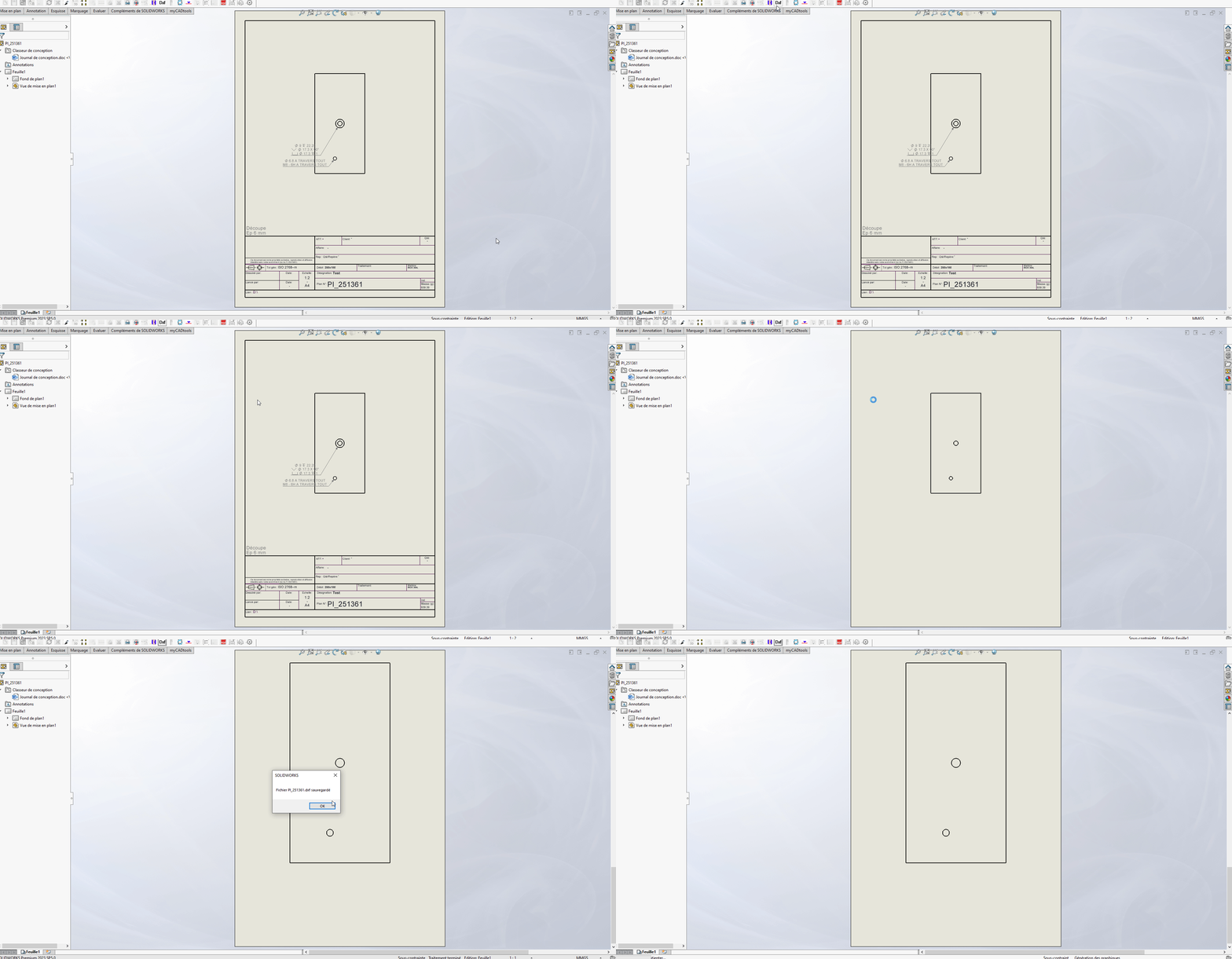
I'm a recent arrival in a company and when I receive the plans from the subcontractors in drawing, I have this kind of thing:
Let's go for the A2 format for this type of plan/room. But I wonder about the quotation of the top piece... Are we no longer rating our parts? Do we only make plans for oxi/laser? I may have learned badly a long time ago so I would like to know if I am wrong.
Personally, no more dimensions on our laser cutting plan, an annotation with the thickness (a possible note for the tapping) and just the unfolded view of my part in the 1st sheet the part ^folded in a 2nd sheet (with rib). And we export the outline of the 1st sheet in dxf, so there's no point in dimensioning the part except wasting time.
Hello and welcome Dam_TcT, As for your screenshot, I can only see one part that can be made of oxy cutting. Generally DXF or dwg is provided for oxy/cutting, dxf / Illustrator8 or earlier and the other one in lazer tube, but I don't see any cutting to be made on the steel round, it's more on tubes. There you go, good luck. @+. AR.
Indeed, we often come across undimensioned plans with HT jumps. But this is not a generality, it all depends on the level of demand. If dimensions are tolerated, if geometric tolerances, etc... induced by the function of the part. Then a more advanced quotation is necessary and unavoidable. The editor of your drawings above considers that the accuracy of the laser cutting machines is sufficient and respects the general tolerance notified on the MEP.
Hello, I don't really see the point of making a one-piece MEP for laser cutting. Laser manufacturers only use the dxf/dwg file, whether for a quote or a cut. OK if you do your MEP automatically, it doesn't take much time but it's pointless, in my opinion
My company calls on a subcontractor to have overall plans, and we receive this type of plan, no detail plan with quotation and second oxy plan, just this type of plan. I know that sending in oxy is still a waste of time but for a plan file, is it overrated the quotes?
For this example I send my plan for oxy, the store receives it, they can only check the odds out of all. no important dimension notify, basically you receive an 881x484 plate with a hole Ø41 and the specifications and filled. I'm caricaturing but I find it a bit abusive to pay for a service and get that...
After I agree, making quotes on plans dedicated to dxf for oxy is still a waste of time. But paying a service provider and getting that ...
For us, this is important on stainless steel parts for the choice of the side to be cut on the top = protection by plastic film for less scratches. And it doesn't take time, a macro makes us the cutting + folding plan, remains juic, the folding ribs to be added by hand. And then batch dxf export via macro and Integration (myCadTools).
If the outer sides are good, there is no reason (except for changes in the meantime) that the rest of the sides are bad. If presta, it means that you pay for the service, so the service sold for me is with this type of odds, if you want more, the cost will be higher as well. For something that has no extra importance! If it is your wish on the other hand it is up to them to adapt, but inevitably, there will be an additional cost.
Edit: On the other hand the A2 format... In this day and age where we want to be more ecological!
If the contract is respected, there is nothing to say. But yes not great. You have to go back to the history of your company's demand with the S/T (with diplomacy...)
Yes indeed I came to the same conclusion that the more we quote our parts the higher the cost will be. After an A2 plan for a round chamfering ... They don't pay for paper After that, for the respect of the specifications, I imagine that with the right tools in the workshop it should be fine.
I was probably too used to it, I'll stop my rant here =P
I'm probably old school. Even if I don't note everything, but an unlisted plan I say well. I've always been told that a plan is a contract between you and the manufacturer. Dxf/Dwg at scale 1 is generally supplied for cutting. But now even 3D is enough. I happened to send a DXF to the scale of my plan (i.e. 1/4), the cut was done via the DXF, the part was at the same scale as the plan . That's probably why plan A2
It's just, it's the PDF plan of the finished part that is authentic, truncated or messed up DXF I've seen a lot of them, moreover as @Le_Bidule says, it all depends on the level of requirement, providing a developed DXF for a bending part on a 1/1 scale works when the tolerances are not too tight, we don't necessarily know the supplier's folding games...
The advantage of showing at least one dimension on the plan (regardless of the file format chosen) allows most conscientious suppliers/machinists/cutters to control the scale of the view they are looking at... if they have a physical graduated rule at hand... Technically I'm in favor of showing the entire quote, most of the time all that's left to do is explain to the recipient how to manage the layers to keep it or not.
Our internal memo: sldprt = 1/1 scale dwg or dxf: Object space = 1/1 scale; paper space = Scale of the sheet + paper format noted in the cartridge. pdf = Scale of the sheet + paper format noted in the cartridge. Paper printing = paper printing is not provided.
When the export is done by macro, no risk. My macro puts the whole thing back to a 1:1 scale (object space and paper), replaces the background plan with a void, hides the taps and the outer circle if milling. Since we put this in place, there has been no more scaling error. And miniature room (in general) And therefore no side for our use.
You can explain " hides the threads and the outer circle if milling ". Does this mean that for tapped holes only the drilling Ø appears on the dxf? What about the outer circle if milling?
I want it! It's beautiful, and indeed making sure with a macro is the must, it's in my to-do-list. DXF/PDF macro recording. I had gone on a second sheet to set up to get my lasers out, but with the scales etc. The two sheets seem to me to be a problem to set up basicly.
It all depends on what is agreed with the subcontractor , if you want the cheapest and the bare necessary for manufacturing. That's enough. If you are willing to pay for over-quality or archiving traceability in case of index evolution, it is possible but it necessarily takes longer, and therefore more expensive, Hey, don't talk to me about automatic quotation, especially on complex bent sheets. It's bound to be shit!
In 2015, I arrived at a company that quoted all its cuts 100%. " In case the workshop wanted to check " ... Results it didn't fish for the balls!! Because no one controls 100% with calipers . We were in a hurry on a project, I said we're going to save money and come out with the plans with only 1 control dimension to avoid DXF scale problems. The bundle of plans came out in 12 days instead of the planned 6 weeks, and since then, no more plans on the sheet metal side have been done in the company , and no one will go back.
However, when creating tools for major aeronautics customers, some departments still require us to take all measurements, for questions of traceability of evolution, especially if the modifications are carried out by different subcontractors. But it necessarily costs them more.
I will respond with my vision as a service provider who regularly delivers complete plan files.
I can understand your question if you have only known totally constrained plans and you are picky. Of course there are standards, quality monitoring and in general only PDFs are really contractual, however:
Would you think of completely dimensioning a part for 3D printing?
For me, the dimensions of size, thickness, and note of recovery and/or tolerances are more than sufficient.
Contractually what has been defined with the service provider? What rate has been agreed? What were the deadlines granted? In general, the pressure comes more from the customer than from the service provider...
Last point, without any judgment, but just curiosity: Why not discuss it directly with the provider rather than here?
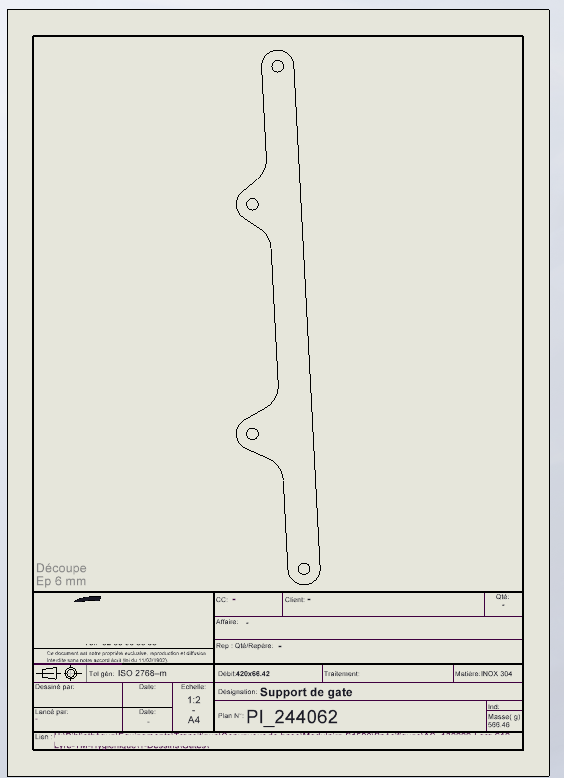


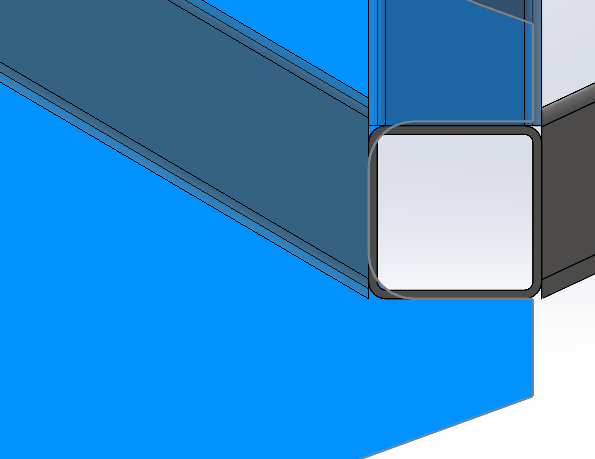
 room (in general)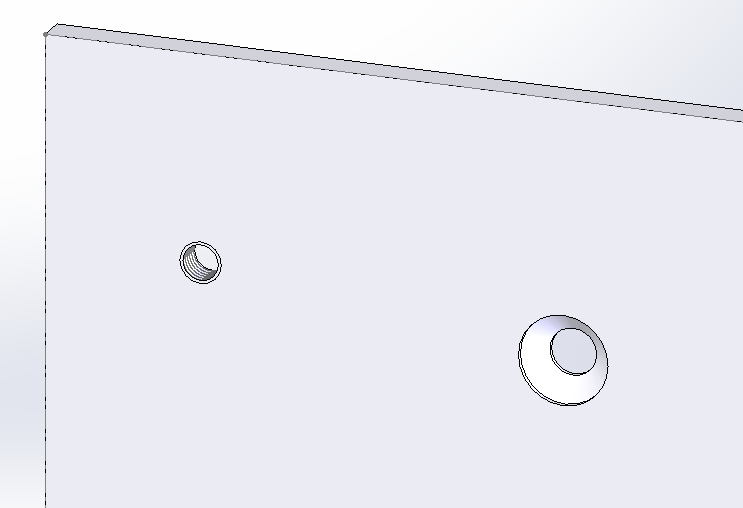
 , if you want the cheapest and the bare necessary for manufacturing. That's enough.
 , and no one will go back.